Understanding Historic Main Streets Across America's Historic Commercial Corridors
From New England mill towns to Western railroad hubs, the United States preserves an extraordinary network of historic commercial corridors, courthouse squares, and restored storefront blocks where brickwork, neon, and community traditions shape how travelers experience downtown America. Educational visitors researching historic main streets and downtown district literacy benefit from treating each street as a living civic landscape where facade grants, parking rules, festival closures, and private-property boundaries determine how safely and meaningfully a district can be explored.
Main street travel differs from resort tourism and large-city sightseeing in pacing, sidewalk width variability, and reliance on Main Street program offices, municipal visitor centers, and seasonal event calendars along Hudson Valley mill towns, Texas courthouse squares, and Pacific Northwest brick avenues. Site conditions respond to scaffolding, street resurfacing, merchant hour changes, and parade barricades in ways no fixed itinerary can guarantee. Educational preparation emphasizes reading official district maps, understanding landmark overlay rules, and verifying current advisories through city websites and Main Street America affiliated organizations rather than outdated social media thumbnails alone.
This guide presents general educational information about American historic downtowns and main street travel. It does not constitute personalized routing advice, architectural engineering assessment, medical guidance, legal counsel, or authorization to enter restricted interiors or construction zones. Always verify street closures, weather advisories, museum hours, and emergency procedures through official municipal channels, state tourism offices, and local emergency services before departure.
How Historic Main Streets Fit Into U.S. Downtown Heritage and Main Street Programs
Main Street America programs, National Register historic districts, downtown development authorities, and municipal heritage trails administer corridors where cast-iron storefronts, pressed-tin cornices, and diagonal parking lanes illustrate commercial eras and public access traditions. Facade improvement grants, design guidelines, and landmark commissions add layers where photography limits, outdoor dining permits, and volunteer staffing differ from adjacent residential blocks. Understanding which agency or nonprofit stewards your destination clarifies where to find closure alerts, seasonal hours, and restoration scaffolding updates.
Private building owners, theater trusts, and railroad museum partners steward additional segments where cast-iron storefronts, pressed-tin cornices, and diagonal parking lanes support self-paced learning and community-led preservation. These sites may impose bag checks, timed entry, or capacity quotas that differ from neighboring sidewalks. Educational travelers read entrance signage and program bulletins before assuming uniform policies across connected commercial corridors.
Downtown character along American main streets arises from documented commercial history, material craftsmanship, respectful travel habits, and long-term maintenance rather than marketing slogans alone. A destination promoted for dramatic neon may offer limited public parking if festival barricades, private lots, or overnight restrictions shift access elsewhere. Educational planners compare travel dates against published event calendars, municipal road project pages, and recent visitor reports while accepting operational and environmental variability.
- Download official district maps, merchant hour links, and street-closure bulletins before departure.
- Identify whether your route crosses active construction zones or private alleyways where trespass rules apply.
- Confirm whether festival weekends, winter ice, or summer heat advisories affect sidewalk comfort and parking.
- Check whether scaffolding, facade work, or theater load-in temporarily alters exterior views.
Regional Context for Historic Main Streets in American Downtown Heritage
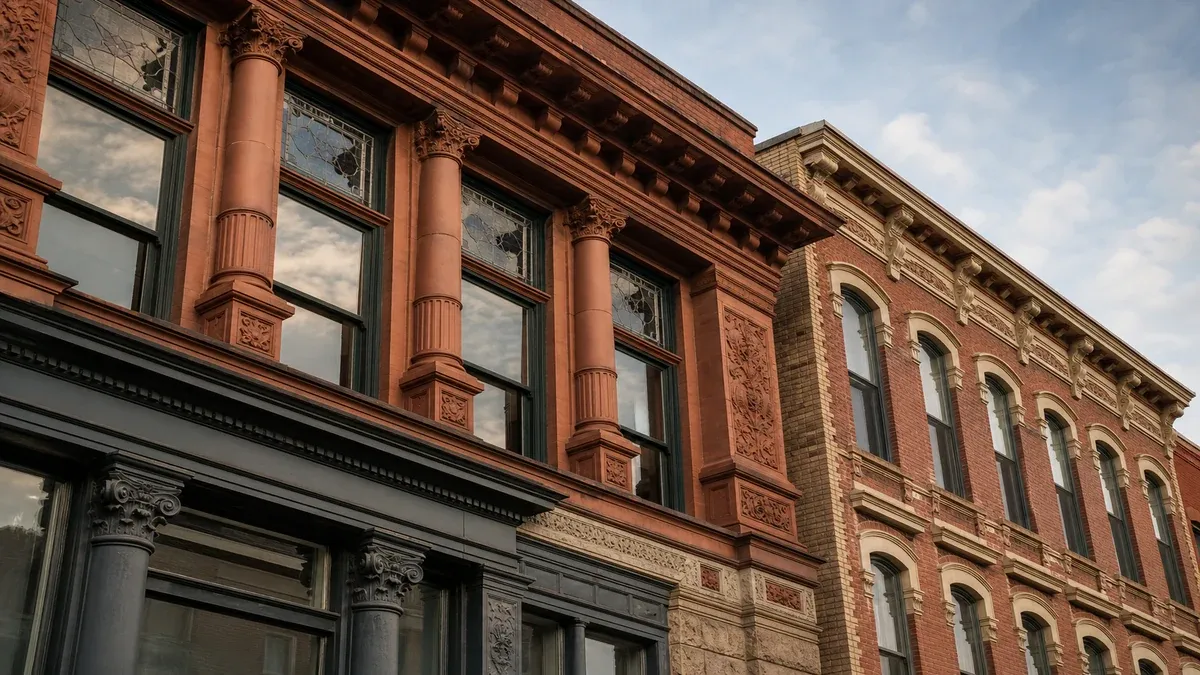
Northeastern and Mid-Atlantic corridors cluster mill buildings, Federal row houses, and brick commercial blocks within walkable distances, allowing travelers studying historic main streets and downtown district literacy to compare industrial and mercantile eras across districts in a single multi-day itinerary. Visitors observe how pressed-metal cornices, cast-iron columns, and painted ghost signs mark decades of economic change and restoration investment.
Southern and Southwestern downtowns provide plaza grids, shaded arcades, and Mission or Mediterranean storefronts that contrast with Midwest Italianate blocks and Pacific Northwest timber-and-brick avenues. Routes through Hudson Valley mill towns, Texas courthouse squares, and Pacific Northwest brick avenues illustrate how climate, sidewalk materials, and festival density affect pacing and photography light quality throughout the day.
Great Plains county seats and Mountain West railroad towns introduce broad avenues, grain-elevator skylines, and winter wind exposure where interpretive plaques and visitor centers differ from denser coastal districts. Seasonal variability reminds educational travelers that main street access is dynamic rather than a static backdrop.
Reading the Streetscape from Cornices, Alleys, and Courthouse Squares
Sanborn-map era overlays and Main Street program inventories help anticipate when historic main streets themes will dominate a visit versus when scaffolding or maintenance limit access. North-facing facades hold softer light during morning hours; west-facing glass storefronts may glare by late afternoon on sunny visits.
Disturbance history—including urban renewal clearances, facade grant cycles, and theater restorations—shapes current visitor conditions that interpretive panels and program managers explain. None of this background substitutes for on-site closure signs, private property notices, or no-entry barricades posted at construction fences.
- Carry a paper walking map or offline navigation when cellular coverage is inconsistent in dense brick canyons.
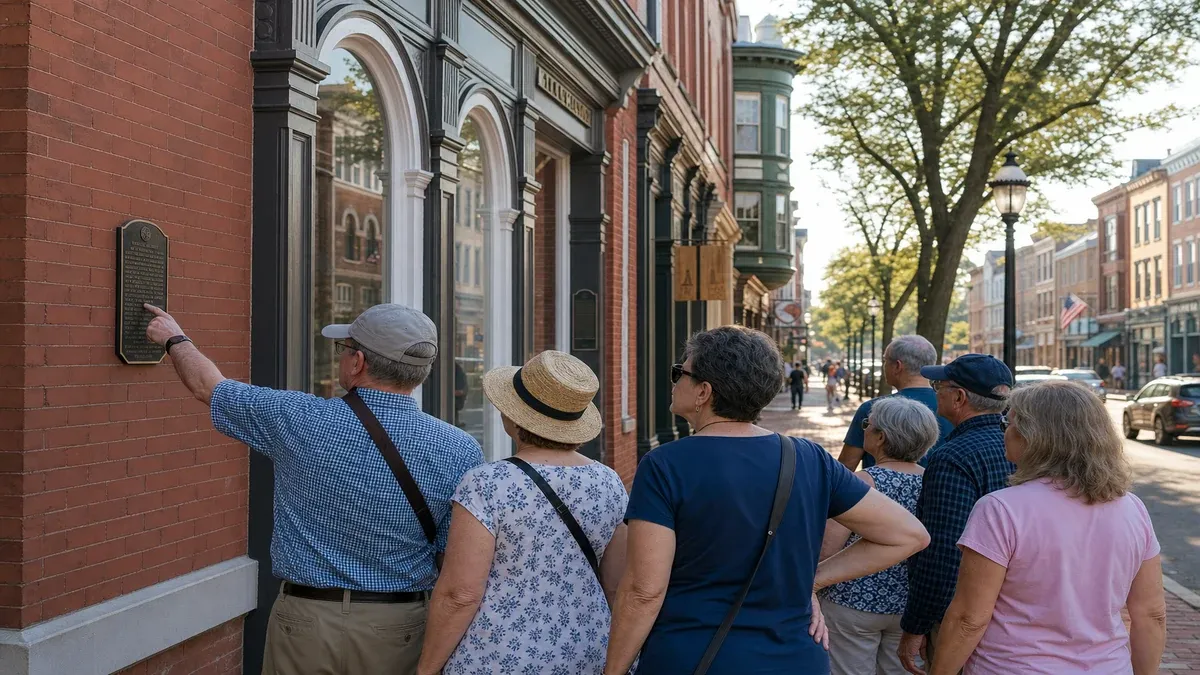
- Note landmark plaques to correlate observations with published district inventories later.
- Expect temporary delays when municipal crews repair brick sidewalks or when festivals pause vehicle access.
- Follow volunteer or municipal staff instructions when detours or no-entry zones appear.
Planning Frameworks for Historic Main Streets
Educational trip design starts with clarifying learning goals rather than treating downtown destinations as checklist trophies. Some travelers prioritize cast-iron storefronts, pressed-tin cornices, and diagonal parking lanes; others focus on theater archives, merchant interviews, or comparing self-guided loops with certified walking tours. Listing priorities helps allocate golden-hour stops without assuming unlimited parking at popular squares.
Lodging availability, curb parking time limits, and trolley or shuttle logistics affect how early you can reach mist-lit storefronts or how late you can depart before meters expire. Researching these logistics in neutral terms avoids frustration when museums close for private events, storms cancel outdoor festivals, or resurfacing blocks key blocks. Accessibility needs—including curb cuts, restroom routes, and service animal policies—should be confirmed through official visitor resources with documented responses when possible.
Multi-stop itineraries require buffer time when a single street closure, tour delay, or merchant staffing shortage reshapes the day. Educational materials describe typical disruption categories without predicting specific outcomes. Overnight stays in downtown inns break long driving days into manageable segments and support local economies tied to heritage tourism.
- Photograph tour confirmations and accessibility correspondence separately from payment card images.
- Pack weather-appropriate layers, sun protection, and a notebook without blocking narrow sidewalks.
- Review bag-size and photography rules against museum and theater policies before interior visits.
- Carry extra walking shoes even on short loops; brick and cobble surfaces accumulate fatigue quickly.
Balancing Budget, Time, and Downtown Travel Priorities
Free sidewalk interpretation and fee-based guided tours both offer strong educational value; tradeoffs involve crowd levels, interpretive staffing, and seasonal access rather than inherent heritage quality. Shoulder seasons may reduce lodging costs while increasing weather uncertainty on exposed plazas.
Regional long weekends can sample elements of historic main streets and downtown district literacy without cross-country flights. Comparing self-guided walking time against commercial tour fees highlights time and fatigue tradeoffs educational planners discuss without asserting one mode is universally superior.
On-Site Experience and Interpretation Related to Historic Main Streets
Visitor center exhibits, wayfinding kiosks, and Main Street program talks provide structured vocabulary for architectural styles, preservation tools, and downtown etiquette. Program availability varies by season and staffing; absence of a scheduled talk does not indicate a deficient destination. Many travelers prepare self-guided study using municipal publications and state historic preservation collections.
Slow movement with intentional pauses at signed overlooks and plaza benches often yields better learning than racing between famous storefronts. Stopping at a public bench to read cornice details and ghost-sign layers teaches patience and helps distinguish festival noise from everyday merchant rhythms. Group dynamics at popular murals require sharing sidewalk space and lowering noise so residents and shoppers are not disturbed.
Authorized viewpoints, walking tours, and interpretive displays remain valuable for historic main streets, yet crowding at iconic neon corners can require rotation and short photo windows. Educational travelers accept that equitable access and pedestrian safety matter more than exclusive proximity claims. Glare, scaffolding netting, and festival banners affect photography; realistic expectations reduce frustration.
- Scan both near and far facade details when reading architectural eras from safe public positions.
- Use polarizing filters and shaded rest breaks to reduce midday glare on glass storefronts.
- Ask visitor center staff for general crowd trends when workload permits, without demanding precise predictions.
- Follow posted rules that restrict drones, tripods, or entry beyond velvet ropes and construction fences.
Seasonal and Environmental Factors Affecting Historic Main Streets
Spring street festivals may open lively corridors while simultaneously triggering temporary parking bans and amplified crowd density. Late-summer heat and winter ice may reduce sidewalk comfort for hours at a time. Educational planners monitor National Weather Service forecasts, municipal alert feeds, and visitor center notices across entire itineraries, not only departure cities.
Thunderstorms, holiday weekend congestion, and overnight freeze-thaw cycles each alter comfort and stopping opportunities along Hudson Valley mill towns, Texas courthouse squares, and Pacific Northwest brick avenues. A single plaza may show soft morning light while adjacent west-facing blocks experience strong afternoon glare. Agencies rarely guarantee spectacle timing; travelers accept natural and civic variability as part of downtown education rather than a service defect.
Understanding these patterns supports realistic scheduling without dramatizing low-probability events or implying that any calendar month is universally ideal.
Weather Delays and Traveler Decision Points
Street closures, flood warnings, and small-group tour cancellations may pause access to landmark interiors with little notice. Operators communicate updates through official websites, variable message signs, and municipal social channels when staffing allows. Educational travelers identify alternate indoor museum options without assuming automatic refunds for third-party bookings.
Travel insurance and medical preparedness decisions belong to individual circumstances; this guide does not recommend specific products or promise reimbursement outcomes.
- Save official street-closure feeds and verified visitor center pages offline before remote segments.
- Allow extra walking time during festival weekends when downtown cores experience barricade congestion.
- Pack layered clothing for rapid temperature changes between shaded arcades and open plazas.
- Turn back when lightning approaches open squares or when fatigue impairs footing on uneven brick.
Gateway Communities and Access Hubs for Historic Main Streets
Municipal visitor centers, Main Street program offices, and regional tourism bureaus complement travel time near Hudson Valley mill towns, Texas courthouse squares, and Pacific Northwest brick avenues. Scheduling a visitor-center stop transforms long transfers into multi-modal educational trips without implying every gateway offers equal resources.
Fuel, groceries, and medical services may be sparse between popular historic districts and surrounding rural approaches. Planning resupply stops prevents risky improvisation on limited-service highways. Smaller plazas may lack trash service during festivals; travelers must understand pack-in and pack-out expectations.
Seasonal trolley options in some heritage towns reduce private vehicle congestion while limiting flexibility; reading schedules prevents missed connections at remote parking lots.
Ethics, Safety, and Community Context Around Historic Main Streets
Entering private courtyards, blocking shop entrances for extended photo sessions, or climbing scaffolding for elevated views may violate local ordinances and endanger workers or pedestrians. Educational visitors debate minimum courtesy toward residents, merchants, and festival volunteers; official Main Street and municipal guidelines provide baseline rules that may exceed generic social media trends.
Residential upper floors, tribal treaty contexts, and active restoration sites adjacent to Hudson Valley mill towns, Texas courthouse squares, and Pacific Northwest brick avenues deserve privacy and cultural respect beyond photography goals. Educational materials describe general etiquette without speaking for private owners or sovereign nations; travelers follow posted protocols and local customs.
Emergency response on crowded festival streets may require extended response timelines when barricades limit vehicle access. Calling 911 remains appropriate for immediate danger; this guide does not provide rescue instructions or outcome guarantees.
- Stay on public sidewalks and marked plazas unless maps explicitly allow additional viewing areas.
- Pack out all trash including food waste from festival and overlook zones.
- Yield to delivery trucks and maintenance traffic on narrow downtown alleys.
- Do not enter closed theaters, active construction zones, or private stairwells regardless of social media examples.
Connecting Historic Main Streets With Broader Main Street Travel Literacy
Readers who finish this module can cross-reference historic main streets with companion guides on historic main streets, downtown walking tours, local architecture, independent shops, local restaurants, historic buildings, community events, photography spots, weekend trips, and visitor guides. Together these topics form a neutral vocabulary for discussing downtown visits with Main Street managers, merchants, and travel companions.
Algorithm-assisted glossary sorting on this site organizes terms for readability; automated tools do not evaluate personal mobility readiness, dietary needs, or property access rights. Human editors review drafts for tone and factual boundaries but cannot monitor real-time street closures or festival cancellation status.
Returning visitors often revisit the same district across seasons to observe how light, merchant mix, and event programming shift interpretation. Educational travel treats repetition as deepening understanding rather than collecting identical photographs.
Summary and Verification Reminder
This overview of historic main streets in American historic downtowns is designed for independent verification with official sources. Compare Main Street program publications, current alert pages, and on-site signage before committing to routes, fees, or overnight stays.
Neutral educational framing helps travelers ask better questions without replacing professional guide services, licensed architects, medical advice, or binding municipal directives. Explore America's historic main streets, storefronts, and community traditions with curiosity, patience, and respect for the people and places that steward them.